Managing Patient Dental Debt: A Simplified Guide for Practices
Dental Billing 101: Simplifying Your Workflow
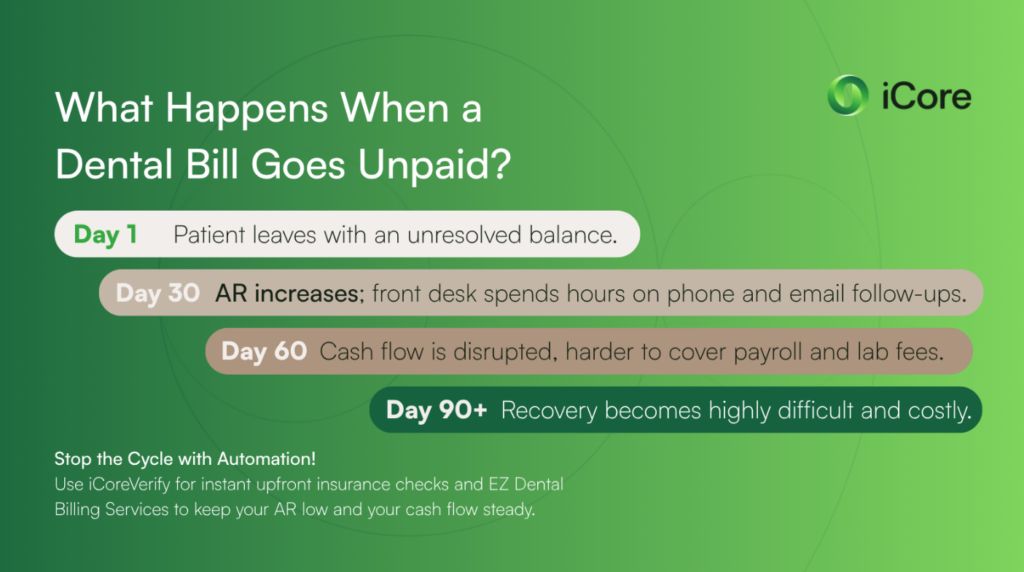
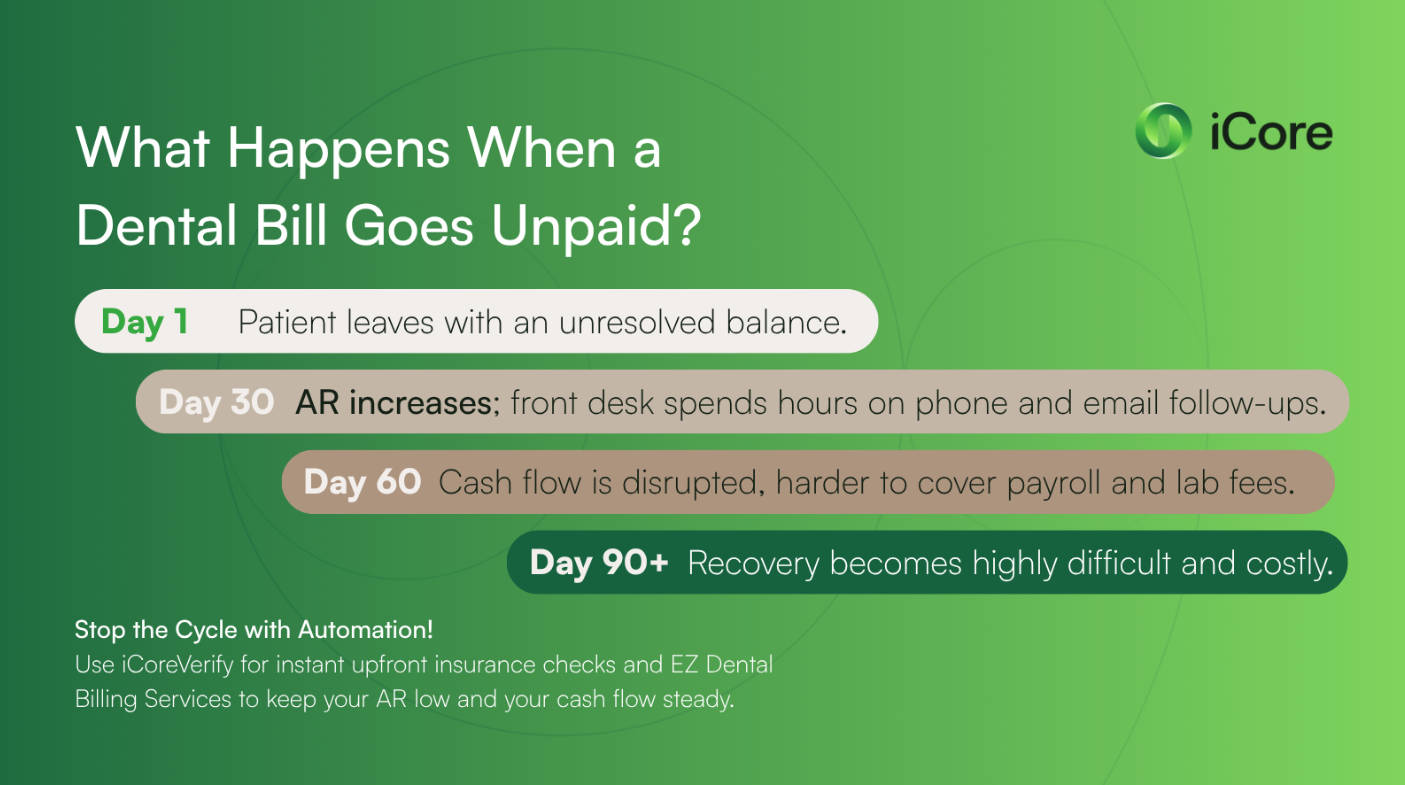
When a patient walks out the door without settling their balance, it is more than just a minor inconvenience; it is a direct hit to your cash flow. Managing patient dental debt is one of the most frustrating challenges a modern practice faces. Unpaid balances quietly drain your revenue, increase the administrative burden on your front desk, and cause your accounts receivable (AR) to skyrocket.
Understanding why these balances go unpaid is the first step toward reclaiming your hard-earned revenue. Often, it isn’t a refusal to pay; rather, it stems from a lack of insurance clarity, unexpected treatment costs, or poor upfront communication. By taking a “Back to Basics” approach, your practice can build a structured, stress-free system that addresses past-due accounts while protecting your vital patient relationships. Let’s break down how to keep your revenue cycle simple and efficient.
1. Implement Upfront Cost Transparency
The easiest way to prevent patient dental debt from accumulating is to address financial expectations before treatment even begins. When patients are hit with unexpected bills after a procedure, they are far more likely to delay payment or ignore the invoice entirely. Your front desk team should provide a clear, itemized breakdown of the total treatment costs, estimated insurance coverage, and the exact out-of-pocket portion the patient is responsible for.
Profitability Tip: Create a standard financial agreement form that patients sign prior to major procedures. This ensures complete alignment on payment expectations and protects your practice’s bottom line.
2. Establish a Consistent Collection Protocol
If a balance does slip through the cracks, having a structured internal timeline prevents the account from aging past the point of recovery. A standard protocol should move from friendly digital reminders (SMS and email) to itemized paper statements, followed by phone calls. Consistently tracking your aging reports ensures that outstanding balances are addressed while they are still manageable, rather than letting them turn into uncollectible debt.
Profitability Tip: Train your front-desk staff on compassionate yet firm communication scripts. Handling overdue accounts with empathy helps resolve financial misunderstandings without damaging patient loyalty.
3. Offer Flexible Payment Options
Many patients genuinely want to resolve their balances but face sudden financial hardships. You can drastically reduce patient dental debt by offering flexible payment solutions, such as split-payment installment arrangements, digital text-to-pay options, or third-party financing solutions. Providing these accessible pathways makes it much easier for patients to fit dental care into their budgets.
Profitability Tip: Set clear parameters for internal payment plans, such as requiring a credit card on file and capping the installment window at three to six months to maintain steady cash flow.
4. Verify Insurance Benefits in Advance
A massive portion of patient dental debt is triggered by retroactive insurance denials or lower-than-expected coverage. Verifying every patient’s active benefits, deductibles, and maximums before they sit in the chair eliminates the guesswork that leads to billing disputes. When your team has accurate insurance data, your upfront estimates match reality, completely removing the surprise factor from dental billing.
Profitability Tip: Perform eligibility checks at least 48 hours prior to the patient’s scheduled appointment time to give your team room to resolve any coverage discrepancies.
The Bridge to Automation: Making it “EZ”
At EZ Dental Billing, we specialize in taking the confusion out of your revenue cycle. Whether you are navigating complex state-specific quirks or looking to master the basics, our EZ Medi-Cal Training Course and Comprehensive Billing Services are designed to maximize your collections without adding stress to your staff.
However, to truly modernize your workflow, manual tracking isn’t enough. By integrating the iCore Enterprise Suite, you can transition from manual verification to total automation:
-
iCoreVerify: Instantly automates insurance eligibility checks before the patient arrives, ensuring your cost estimates are always accurate and preventing debt before it starts.
- iCoreAnalytics: Effortlessly tracks your aging AR reports, giving you a clear view of your financial health and showing you exactly where your collection efforts need a boost.
Ready to experience a healthier revenue cycle? Contact EZ Dental Billing today for a free consultation!
Dental Billing 101: Simplifying Your Workflow
When a patient walks out the door without settling their balance, it is more than just a minor inconvenience; it is a direct hit to your cash flow. Managing patient dental debt is one of the most frustrating challenges a modern practice faces. Unpaid balances quietly drain your revenue, increase the administrative burden on your front desk, and cause your accounts receivable (AR) to skyrocket.
Understanding why these balances go unpaid is the first step toward reclaiming your hard-earned revenue. Often, it isn’t a refusal to pay; rather, it stems from a lack of insurance clarity, unexpected treatment costs, or poor upfront communication. By taking a “Back to Basics” approach, your practice can build a structured, stress-free system that addresses past-due accounts while protecting your vital patient relationships. Let’s break down how to keep your revenue cycle simple and efficient.
1. Implement Upfront Cost Transparency
The easiest way to prevent patient dental debt from accumulating is to address financial expectations before treatment even begins. When patients are hit with unexpected bills after a procedure, they are far more likely to delay payment or ignore the invoice entirely. Your front desk team should provide a clear, itemized breakdown of the total treatment costs, estimated insurance coverage, and the exact out-of-pocket portion the patient is responsible for.
Profitability Tip: Create a standard financial agreement form that patients sign prior to major procedures. This ensures complete alignment on payment expectations and protects your practice’s bottom line.
2. Establish a Consistent Collection Protocol
If a balance does slip through the cracks, having a structured internal timeline prevents the account from aging past the point of recovery. A standard protocol should move from friendly digital reminders (SMS and email) to itemized paper statements, followed by phone calls. Consistently tracking your aging reports ensures that outstanding balances are addressed while they are still manageable, rather than letting them turn into uncollectible debt.
Profitability Tip: Train your front-desk staff on compassionate yet firm communication scripts. Handling overdue accounts with empathy helps resolve financial misunderstandings without damaging patient loyalty.
3. Offer Flexible Payment Options
Many patients genuinely want to resolve their balances but face sudden financial hardships. You can drastically reduce patient dental debt by offering flexible payment solutions, such as split-payment installment arrangements, digital text-to-pay options, or third-party financing solutions. Providing these accessible pathways makes it much easier for patients to fit dental care into their budgets.
Profitability Tip: Set clear parameters for internal payment plans, such as requiring a credit card on file and capping the installment window at three to six months to maintain steady cash flow.
4. Verify Insurance Benefits in Advance
A massive portion of patient dental debt is triggered by retroactive insurance denials or lower-than-expected coverage. Verifying every patient’s active benefits, deductibles, and maximums before they sit in the chair eliminates the guesswork that leads to billing disputes. When your team has accurate insurance data, your upfront estimates match reality, completely removing the surprise factor from dental billing.
Profitability Tip: Perform eligibility checks at least 48 hours prior to the patient’s scheduled appointment time to give your team room to resolve any coverage discrepancies.
The Bridge to Automation: Making it “EZ”
At EZ Dental Billing, we specialize in taking the confusion out of your revenue cycle. Whether you are navigating complex state-specific quirks or looking to master the basics, our EZ Medi-Cal Training Course and Comprehensive Billing Services are designed to maximize your collections without adding stress to your staff.
However, to truly modernize your workflow, manual tracking isn’t enough. By integrating the iCore Enterprise Suite, you can transition from manual verification to total automation:
-
iCoreVerify: Instantly automates insurance eligibility checks before the patient arrives, ensuring your cost estimates are always accurate and preventing debt before it starts.
- iCoreAnalytics: Effortlessly tracks your aging AR reports, giving you a clear view of your financial health and showing you exactly where your collection efforts need a boost.
Ready to experience a healthier revenue cycle? Contact EZ Dental Billing today for a free consultation!